What Is ACOS in Amazon Ads? The Complete Guide for KDP Authors in 2026
ACOS (Advertising Cost of Sales) is a crucial metric in Amazon Ads that measures the efficiency of your ad campaigns by showing the percentage of your ad spend
What Is ACOS in Amazon Ads? The Complete Guide for KDP Authors in 2026
ACOS (Advertising Cost of Sales) is a crucial metric in Amazon Ads that measures the efficiency of your ad campaigns by showing the percentage of your ad spend relative to the ad-generated sales. For KDP authors, understanding and optimizing ACOS is paramount because it directly impacts the profitability of your book advertising efforts, helping you determine if your ad campaigns are making you money or costing you more than they're bringing in.
Table of Contents
- Understanding ACOS: The Core Metric for KDP Ad Success
- Calculating Your Break-Even ACOS: The Profitability Threshold
- Good ACOS vs. Bad ACOS: Setting Realistic Goals for KDP Authors
- Strategies to Improve Your ACOS in Amazon Ads
- Advanced ACOS Management for Scaling KDP Authors
- Common ACOS Mistakes KDP Authors Make and How to Avoid Them
Understanding ACOS: The Core Metric for KDP Ad Success
For KDP authors navigating the competitive landscape of Amazon, understanding ACOS is not just an option—it's a necessity. ACOS, or Advertising Cost of Sales, is the bedrock metric that tells you whether your Amazon Ads are actually contributing to your bottom line or simply burning through your budget. It's a simple percentage that reveals the relationship between your ad spend and the revenue generated directly from those ads. Without a firm grasp of ACOS, you're essentially flying blind, hoping your ad campaigns are working without any real data to back it up.
The Simple ACOS Formula for Authors
The formula for ACOS is straightforward:
ACOS = (Total Ad Spend / Total Ad Sales) * 100
Let's break that down with an example relevant to KDP authors. Imagine you spend $50 on Amazon Ads for your latest fantasy novel. In return, those ads directly lead to $100 in book sales.
Your ACOS would be: ($50 / $100) * 100 = 50%.
This means for every dollar you spent on ads, you generated two dollars in sales. At first glance, 50% might seem high, but whether it's "good" or "bad" depends entirely on your book's royalty rate and your overall advertising goals, which we'll dive into shortly. The key is that this metric provides a clear, quantifiable measure of your ad efficiency. It's a direct indicator of how much it costs you to generate a sale through advertising.
Why ACOS Matters More Than Ever for KDP Authors
The Amazon marketplace is more crowded than ever, with millions of books vying for readers' attention. Organic discoverability, while still important, is increasingly challenging. Amazon Ads have become a vital tool for KDP authors to get their books seen. However, simply running ads isn't enough; you need to run profitable ads. This is where ACOS comes in.
ACOS allows you to:
- Gauge profitability: Quickly see if your ad campaigns are making money or losing it.
- Optimize spend: Identify which campaigns, ad groups, and keywords are performing well and which are draining your budget.
- Make informed decisions: Decide whether to increase bids, decrease bids, pause campaigns, or scale successful ones.
- Allocate resources effectively: Shift your ad budget to the books and campaigns that offer the best return.
Without actively monitoring and managing your ACOS, you risk pouring money into ineffective campaigns, hindering your ability to invest in future book covers, editing, or even your next writing project. It's the financial compass for your KDP advertising journey.
Distinguishing ACOS from ROAS and TACOS
While ACOS is central, it's helpful to understand its cousins: ROAS and TACOS.
ROAS (Return on Ad Spend): This is essentially the inverse of ACOS, often expressed as a ratio rather than a percentage.
ROAS = Total Ad Sales / Total Ad SpendUsing our earlier example:$100 / $50 = 2. This means for every dollar spent, you get $2 back. ACOS and ROAS convey the same information, just from different angles. Many advertisers prefer ROAS because a higher number always means better performance (e.g., 5 is better than 2), whereas with ACOS, a lower number is better. For KDP authors, ACOS is the more commonly discussed metric within the Amazon Ads interface.TACOS (Total Advertising Cost of Sales): This metric provides a broader view of your advertising impact. While ACOS only considers sales directly attributed to ads, TACOS takes into account all your sales on Amazon (both ad-attributed and organic) against your total ad spend.
TACOS = (Total Ad Spend / Total Organic + Ad Sales) * 100TACOS is crucial for KDP authors because Amazon Ads often have a halo effect, boosting a book's visibility and leading to more organic sales. A campaign might have a slightly high ACOS, but if it significantly drives down your TACOS by boosting organic rank, it could still be highly profitable overall. For instance, if your ACOS is 50%, but your TACOS is 20% because your ads are driving massive organic sales, you're doing incredibly well. Many KDP authors find that a "good" ACOS might be slightly above their break-even point if their TACOS is low, indicating a strong positive impact on overall sales and discoverability.
📚 Recommended Resource: "Let's Get Digital" by David Gaughran This book is a foundational read for any KDP author looking to understand the business side of self-publishing, including how to effectively market and sell books in the digital age. 🛒 Buy on Amazon | 📖 Buy on Bookshop.org
Calculating Your Break-Even ACOS: The Profitability Threshold
Before you can determine if your ACOS is "good" or "bad," you need to know your break-even ACOS. This is the maximum ACOS you can sustain without losing money on a single ad-attributed sale. For KDP authors, calculating this isn't just about the book's list price; it involves understanding your royalty rates and, crucially, the often-overlooked value of Kindle Unlimited (KU) page reads.
Step 1: Determine Your Royalty Per Sale
Amazon KDP offers different royalty rates depending on your book's price and format.
- Ebooks:
- 35% Royalty: For ebooks priced below $2.99 or above $9.99.
- 70% Royalty: For ebooks priced between $2.99 and $9.99 (with some caveats like delivery fees). This is the sweet spot for most KDP authors.
- Paperbacks/Hardcovers: Royalties are typically 60% of the list price, minus printing costs.
Let's assume you have an ebook priced at $4.99, qualifying for the 70% royalty.
Your royalty per sale would be: $4.99 * 0.70 = $3.49.
However, remember the "delivery fee" for 70% royalty books. For a typical ebook, this might be around $0.10-$0.15. So, your net royalty might be closer to $3.49 - $0.15 = $3.34.
For a paperback priced at $14.99 with a printing cost of $4.00:
Your royalty per sale would be: ($14.99 * 0.60) - $4.00 = $8.99 - $4.00 = $4.99.
Always use your net royalty after all fees and printing costs.
Step 2: Factor in Kindle Unlimited Page Reads
This is where many KDP authors miss a significant piece of the puzzle. If your book is enrolled in KDP Select, it's available through Kindle Unlimited. When a KU subscriber reads your book, you get paid per page read from the KDP Global Fund. While the exact per-page rate fluctuates monthly (it's usually around $0.004 to $0.005), it adds significant value to each "sale" (or borrow).
If your book has 300 pages and the KU rate is $0.0045 per page, a full read-through generates: 300 pages * $0.0045/page = $1.35.
This KU income is crucial because an ad click might lead to a KU borrow instead of a direct sale. If you only count direct sales, your ACOS will look worse than it truly is. To account for this, you need to estimate the equivalent value of KU reads.
A common approach is to track your ratio of KU borrows to direct sales. If for every 10 sales, you get 5 KU full read-throughs, then your effective "sales" from ads should include this KU value. For simplicity in calculating break-even ACOS, many authors average their KU income per borrow or factor in a percentage of their ad-attributed KU reads.
For example, if your average KU borrow generates $1.35, and your ads lead to 10 direct sales and 5 KU full reads, your total ad-attributed revenue is (10 * $3.34) + (5 * $1.35) = $33.40 + $6.75 = $40.15.
Step 3: Calculate Your Break-Even Point
Once you have your net royalty per sale (and ideally, an estimated equivalent for KU borrows), you can calculate your break-even ACOS.
Break-Even ACOS = (Net Royalty Per Sale / Book List Price) * 100
Let's use our ebook example:
- List Price: $4.99
- Net Royalty (70% less delivery fee): $3.34
Break-Even ACOS = ($3.34 / $4.99) * 100 = 66.93%
This means if your ACOS is 66.93%, you are breaking even on that specific ad-attributed sale. Any ACOS below 66.93% means you are making a profit on that sale. Any ACOS above 66.93% means you are losing money on that sale.
Important Note: This calculation is for the first book in a series. If you have a series, your break-even ACOS can be much higher because you're factoring in the read-through revenue from subsequent books. We'll discuss this more in the next section.
You can use a tool like the BookAds AI Free ACOS Calculator to quickly determine your break-even ACOS and understand the impact of different pricing and royalty structures.
Case Study: A Mid-List Thriller Author's ACOS
Case Study: Mid-List Thriller Author — Before/After
Sarah, a KDP author of a popular thriller series, was running Amazon Ads for her first book, "The Silent Witness."
Before:
- Book Price: $3.99 (70% royalty)
- Net Royalty (after delivery fee): $3.99 * 0.70 - $0.12 = $2.67
- Estimated KU Value (per full read): $1.20 (based on 250 pages at $0.0048/page)
- Break-Even ACOS (direct sale only): ($2.67 / $3.99) * 100 = 66.9%
- Average ACOS: 85%
- Problem: Sarah was consistently losing money on her ads, but she knew the ads were driving some organic sales for her series. She was hesitant to cut them entirely.
After (with a better understanding of ACOS and series read-through): Sarah realized she needed to factor in the value of her entire series. Her first book was a loss leader.
- Read-through Rate: 40% of readers who bought Book 1 went on to buy Book 2 (also $3.99, $2.67 royalty).
- Average Lifetime Value (LTV) per Book 1 sale: $2.67 (Book 1) + (0.40 * $2.67) (Book 2) = $2.67 + $1.07 = $3.74
- New Effective Break-Even ACOS (considering LTV): ($3.74 / $3.99) * 100 = 93.7%
- Action: With this new understanding, Sarah realized her 85% ACOS was actually profitable when considering the read-through to Book 2. She continued her ads, focusing on optimizing keywords to stay below 90% ACOS, and saw her overall series revenue climb. She also started tracking ad-attributed KU borrows more closely, further improving her understanding of total ad revenue.
This case study highlights that ACOS is rarely a standalone metric, especially for KDP authors with series.
Good ACOS vs. Bad ACOS: Setting Realistic Goals for KDP Authors
Once you know your break-even ACOS, the next step is to define what constitutes a "good" or "bad" ACOS for your specific situation. There's no universal "good" ACOS percentage because it's highly dependent on your goals, your book's pricing, and whether it's part of a series. What's profitable for one author might be a money pit for another.
Understanding Your Campaign Goals
Your desired ACOS will vary based on the objective of your ad campaign:
- Profitability (Target ACOS < Break-Even ACOS): This is the most common goal. You want every ad-attributed sale to generate a direct profit. If your break-even ACOS is 60%, you might aim for a target ACOS of 40-50% to ensure a healthy margin.
- Visibility/Rank Boosting (Target ACOS ≈ Break-Even ACOS): Sometimes, especially for new releases or books struggling with discoverability, you might be willing to break even or even take a small loss on ad sales. The goal here is to drive volume, increase your book's sales rank, and generate reviews, which can lead to more organic sales down the line. In this scenario, you might aim for an ACOS close to your break-even point (e.g., 60-70%).
- Lead Generation/Loss Leader (Target ACOS > Break-Even ACOS): For authors with a strong series, the first book might be advertised as a loss leader. You might accept an ACOS significantly above your break-even point for Book 1, knowing that a certain percentage of those readers will buy Books 2, 3, and so on, making the overall campaign highly profitable. As seen in Sarah's case study, an ACOS of 80-90% for a first-in-series book could be excellent if it drives strong read-through.
- Brand Building: For authors with a long-term vision, ads might be used to increase brand awareness, even if individual campaign ACOS is high. This is less common for KDP authors focused on direct sales but can play a role in a broader marketing strategy.
Benchmark ACOS Ranges for KDP Authors
While there's no single magic number, here are some general benchmarks for KDP authors:
- Highly Profitable: 10-30% ACOS. This is often achieved with highly optimized campaigns, very strong book covers/blurbs, or by targeting low-competition keywords.
- Moderately Profitable: 30-50% ACOS. A solid, sustainable range for most KDP authors aiming for direct profit.
- Break-Even/Visibility Focus: 50-70% ACOS (or up to 90% for loss-leader series openers). This range is acceptable if your goal is to boost rank, gather reviews, or drive read-through.
- Losing Money: 70%+ ACOS (unless it's a deliberate loss leader for a series with strong read-through). If you're consistently in this range without a clear strategy for overall profitability (e.g., strong series read-through or significant organic boost), you're likely overspending.
These are rough guidelines. Your specific genre, book price, and market competition will influence what's achievable.
The Impact of Book Price and Series Read-Through
The price of your book and whether it's part of a series are two of the biggest factors influencing what ACOS you can tolerate.
- Book Price: Higher-priced books (e.g., $7.99-$9.99 ebooks, or premium paperbacks) have a higher net royalty per sale, which means you can afford a higher ACOS and still be profitable. A $9.99 ebook with a 70% royalty gives you ~$6.80 profit, allowing for a break-even ACOS of nearly 70%. A $2.99 ebook with a 70% royalty gives you ~$1.90 profit, meaning your break-even ACOS is closer to 63%.
- Series Read-Through: This is the game-changer for many KDP authors. If you write a series, the first book often serves as an "entry point." You might be willing to break even or even lose a little money on the first book's ad sales if a significant percentage of those readers go on to buy subsequent books in the series. This is where the concept of Customer Lifetime Value (CLTV) becomes critical. For example, if advertising your first book at an 80% ACOS leads to 50% of those readers buying the next two books, your overall ACOS for that customer journey could be much lower and highly profitable. This requires tracking your read-through rates and understanding the average revenue generated by a new reader entering your series.
Further reading: The Alliance of Independent Authors explains how to calculate your author's lifetime value, a crucial concept for understanding series profitability.
📚 Recommended Resource: "Your First 10,000 Readers" by Nick Stephenson An essential guide for KDP authors looking to build an audience and understand the marketing funnels that turn casual readers into loyal fans, which directly impacts your ACOS by increasing LTV. 🛒 Buy on Amazon | 📖 Buy on Bookshop.org
Strategies to Improve Your ACOS in Amazon Ads
Improving your ACOS means either increasing your ad-attributed sales while keeping spend constant, or decreasing your ad spend while maintaining sales. It's a continuous optimization process that involves several key areas.
Optimizing Keywords and Targeting
The keywords and targeting you choose are the foundation of your ad campaign's efficiency.
- Keyword Research: Don't guess. Use tools like Publisher Rocket or Helium 10 to find relevant, low-competition, high-volume keywords. Think like a reader: what would they type into the search bar to find a book like yours? Include long-tail keywords (e.g., "cozy mystery series set in a bookstore") as they often have lower competition and higher conversion rates.
- Match Types: Understand the difference between broad, phrase, and exact match types.
- Broad Match: Reaches the widest audience but can be inefficient. Use for discovery, then harvest good keywords.
- Phrase Match: More targeted than broad, includes the exact phrase and close variations.
- Exact Match: Most precise, targets only the exact keyword. Often yields the best ACOS but has lower reach.
- Start broad to discover, then narrow down to phrase and exact for optimization.
- ASIN Targeting: Directly target competitor books or complementary books (e.g., targeting other books in your genre or by authors similar to you). This can be highly effective as you're reaching an audience already interested in similar content.
- Category Targeting: Target specific sub-categories on Amazon. This can be broad, so monitor closely.
- Audience Targeting (Sponsored Display): Target readers based on their shopping behaviors or interests. This is a more advanced option but can be very powerful for reaching specific demographics.
- Regular Review: Continually review your search term reports. Add high-performing search terms as new keywords in exact match campaigns. Add irrelevant or high-ACOS search terms as negative keywords.
Refining Bids for Maximum Efficiency
Your bid strategy directly impacts your ACOS. Bidding too high wastes money; bidding too low means your ads won't be seen.
- Start Conservatively: Begin with lower bids than Amazon's suggestions, especially for new keywords or campaigns. Increase them gradually if your impressions and clicks are too low.
- Dynamic Bids - Down Only: For most KDP authors, "Dynamic bids - down only" is the safest option. Amazon will lower your bid in real-time for clicks less likely to convert, helping to reduce wasted spend and improve ACOS.
- Dynamic Bids - Up and Down: Use this cautiously, primarily for proven, high-performing keywords or campaigns where you want to maximize visibility and are willing to pay more for high-conversion opportunities.
- Fixed Bids: Rarely recommended for KDP authors as it doesn't allow Amazon to optimize in real-time.
- Bid Adjustments by Placement: If your ads perform exceptionally well at the "Top of search (first page)" placement, consider adding a positive bid adjustment (e.g., +20-50%) for that placement. Conversely, if "Product pages" perform poorly, you might lower the bid adjustment there.
- Automated Bidding: Tools like BookAds AI can automate bid adjustments based on your target ACOS and campaign performance, saving you significant time and often leading to better results than manual optimization. This is particularly useful for managing many campaigns and keywords.
Enhancing Your Book's Conversion Rate
Even the best-targeted ads won't perform if your book page doesn't convert clicks into sales. A low conversion rate means a high ACOS because you're paying for clicks that don't result in sales.
- Compelling Book Cover: This is your book's most important marketing tool. It needs to be professional, genre-appropriate, and stand out. A poor cover will kill your ad performance regardless of your ACOS strategy.
- Enticing Blurb/Description: Your blurb needs to hook readers immediately, clearly convey the genre, and create desire. Use strong opening lines, clear plot points, and a compelling call to action.
- Strong Reviews: Social proof is powerful. Aim for at least 20-30 reviews (ideally 4+ stars) before heavily investing in ads. A low number of reviews or poor reviews will significantly hurt your conversion rate.
- "Look Inside" Feature: Ensure your sample is well-formatted, error-free, and representative of your book's quality. The first few pages are critical for converting browsers into buyers.
- Competitive Pricing: While not directly part of the book page, your price needs to be competitive within your genre and perceived value. Test different price points to see what converts best while maintaining profitability.
Leveraging Negative Keywords and ASINs
Negative keywords and ASINs tell Amazon where not to show your ads, preventing wasted spend on irrelevant clicks.
- Negative Keywords: Regularly review your search term reports. Any search term that generated clicks but no sales, or clicks for irrelevant searches, should be added as a negative keyword. For example, if you write clean romance, and your ads show up for "erotic romance," add "erotic" as a negative keyword.
- Negative Phrase Match: Excludes searches containing the exact phrase.
- Negative Exact Match: Excludes only the exact search term.
- Negative ASINs: If you're targeting competitor ASINs and some are consistently generating clicks but no sales (or very high ACOS), add them as negative ASINs to prevent your ads from showing on those product pages.
- Continuous Process: This isn't a one-time task. Search term reports should be reviewed weekly or bi-weekly, especially for broad and phrase match campaigns, to continually refine your negative lists. This is one of the most effective ways to lower ACOS over time.
📚 Recommended Resource: "Write. Publish. Repeat." by Sean Platt & Johnny B. Truant This book offers a holistic view of the self-publishing journey, emphasizing consistent output and smart business practices, which are foundational for sustainable ad campaigns and ACOS management. 🛒 Buy on Amazon | 📖 Buy on Bookshop.org
Advanced ACOS Management for Scaling KDP Authors
As KDP authors scale their advertising efforts, simply reacting to ACOS isn't enough. Proactive, strategic management becomes essential to maintain profitability and grow sales. This involves segmenting campaigns, understanding reader lifetime value, and leveraging automation.
Segmenting Campaigns for Better Control
Running all your ads in one or two broad campaigns makes ACOS optimization incredibly difficult. Segmenting your campaigns allows for granular control and better insights.
- Campaign Types: Separate your campaigns by type (e.g., Sponsored Products, Sponsored Brands, Sponsored Display). Each has different objectives and performance metrics.
- Match Types: Create separate campaigns for broad, phrase, and exact match keywords. This allows you to set different bids and budgets for each, optimizing for discovery (broad) versus profitability (exact).
- Targeting Methods: Have distinct campaigns for keyword targeting, ASIN targeting, and category targeting. This helps you identify which targeting strategies are most effective for your books.
- Book Series: For authors with a series, create separate campaigns for each book. This is crucial for managing ACOS, especially if you're using the first book as a loss leader. You might have a higher ACOS tolerance for Book 1 campaigns than for Book 3 campaigns.
- Performance Tiers: Consider creating "discovery" campaigns (broader, higher ACOS tolerance) and "profit" campaigns (exact, lower ACOS target).
- New vs. Evergreen: Separate campaigns for new releases versus evergreen titles. New releases often require more aggressive bidding and can tolerate a higher ACOS to gain initial traction.
This segmentation allows you to identify exactly where your ad spend is going and which strategies are yielding the best ACOS, enabling more precise adjustments.
The Role of Lifetime Value (LTV) in ACOS Decisions
For KDP authors, especially those with series, focusing solely on the ACOS of a single book sale can be misleading. The true measure of success often lies in the Lifetime Value (LTV) of a reader. LTV is the total revenue a reader generates over their entire relationship with your author brand.
- Calculating LTV: This involves tracking how many readers who buy Book 1 go on to buy Book 2, Book 3, and so on. It also includes any newsletter sign-ups, merchandise purchases, or other revenue streams.
- Example: If a reader buys Book 1 ($3.99, $2.67 royalty), then 40% buy Book 2 ($3.99, $2.67 royalty), and 20% buy Book 3 ($3.99, $2.67 royalty), their LTV from book sales alone is:
$2.67 (Book 1) + (0.40 * $2.67) (Book 2) + (0.20 * $2.67) (Book 3) = $2.67 + $1.07 + $0.53 = $4.27
- Example: If a reader buys Book 1 ($3.99, $2.67 royalty), then 40% buy Book 2 ($3.99, $2.67 royalty), and 20% buy Book 3 ($3.99, $2.67 royalty), their LTV from book sales alone is:
- Adjusting Break-Even ACOS for LTV: If the LTV of a new reader is $4.27, and your first book's price is $3.99, your effective break-even ACOS for acquiring that reader through an ad for Book 1 becomes:
($4.27 / $3.99) * 100 = 107%This means you could theoretically tolerate an ACOS of over 100% on Book 1 and still be profitable over the reader's lifetime. This understanding is critical for scaling, as it allows you to be much more aggressive in your advertising for frontlist titles, knowing the backlist will make up the difference.
Automating ACOS Management with AI Tools
Manually managing ACOS across dozens or hundreds of campaigns, ad groups, and keywords is incredibly time-consuming and prone to human error. This is where AI-powered automation platforms like BookAds AI become invaluable.
- Real-time Bid Optimization: AI can analyze performance data (clicks, sales, ACOS, search terms) in real-time and automatically adjust bids up or down to hit your target ACOS. This is far more precise and responsive than manual adjustments.
- Keyword Harvesting: AI can automatically identify high-performing search terms from broad campaigns and add them as exact match keywords to dedicated profit campaigns, while simultaneously adding underperforming terms as negative keywords.
- Budget Management: AI can intelligently allocate budget across campaigns based on performance, ensuring your money is spent on what's working best.
- Predictive Analytics: Advanced AI can predict future performance trends, allowing for proactive adjustments rather than reactive ones.
- Time Savings: The most significant benefit for KDP authors is the massive time savings. Instead of spending hours each week poring over spreadsheets, you can focus on writing your next book, knowing your ads are being optimized around the clock.
Further reading: Amazon's own Sponsored Products guide provides foundational knowledge on how their ad system works, which is essential for understanding how automation tools interact with it.
Common ACOS Mistakes KDP Authors Make and How to Avoid Them
Even experienced KDP authors can fall into common ACOS traps. Avoiding these pitfalls is key to maintaining a healthy ad budget and maximizing your book's profitability.
Ignoring Organic Sales and TACOS
Mistake: Focusing solely on ACOS and cutting profitable ads because their ACOS is "too high," without considering the impact on overall sales. How to Avoid: Understand and track TACOS (Total Advertising Cost of Sales). A campaign might have an ACOS of 70% (which might seem high for a single book sale), but if it drives a significant increase in organic sales, your TACOS could be 25%, indicating a highly successful campaign overall. Ads often boost a book's visibility and ranking, leading to a virtuous cycle of more organic sales, which ACOS alone won't show. Always look at the bigger picture of your total sales versus total ad spend.
Setting and Forgetting Your Campaigns
Mistake: Launching Amazon Ads and then leaving them untouched for weeks or months, assuming they'll run efficiently on their own. How to Avoid: Amazon Ads require continuous monitoring and optimization. The marketplace is dynamic, with new books, new competitors, and changing reader trends. ✅ Daily/Weekly Checks: Monitor your ACOS, clicks, impressions, and sales regularly. ✅ Search Term Reports: Review search term reports at least weekly to add negative keywords and harvest new positive ones. ✅ Bid Adjustments: Adjust bids up for high-performing keywords and down for underperforming ones. ✅ Campaign Structure: Experiment with new campaign types or targeting methods. ✅ A/B Testing: Test different ad copy, headlines, or book covers to see what resonates best. This ongoing engagement is crucial for maintaining a healthy ACOS.
Focusing Solely on ACOS in Isolation
Mistake: Making ad decisions based purely on ACOS without considering other vital metrics like impressions, clicks, conversion rate (CVR), Customer Lifetime Value (LTV), or overall profit. How to Avoid: ACOS is a critical metric, but it's just one piece of the puzzle.
- Impressions & Clicks: Low impressions mean your bids are too low or your targeting is too narrow. Low clicks (high impressions) mean your ad creative (cover, headline) isn't compelling.
- Conversion Rate (CVR): If you have a good click-through rate (CTR) but a high ACOS, it often points to a low CVR on your book page. This means people are clicking your ad but not buying your book. Address your cover, blurb, reviews, or sample.
- Profit: Ultimately, profit is king. A low ACOS on a campaign that only generates a few sales might be less valuable than a slightly higher ACOS campaign that drives significant volume and overall profit. Use a holistic view.
Underestimating the Power of Your Book Page
Mistake: Believing that ad campaigns alone will sell your book, regardless of the quality of your book's Amazon product page. How to Avoid: Your book page (cover, blurb, reviews, Look Inside, categories, keywords) is the ultimate conversion tool. Ads drive traffic, but your page converts that traffic into sales. ✅ Professional Cover: Invest in a high-quality, genre-appropriate cover. ✅ Killer Blurb: Craft a compelling blurb that hooks readers and sets expectations. ✅ Strong Reviews: Actively seek reviews. Social proof is paramount. ✅ Optimized Keywords: Ensure your backend keywords and categories are relevant and well-chosen. ✅ Look Inside Sample: Make sure your first few pages are polished and engaging. A poorly optimized book page will always lead to a high ACOS because you're paying for clicks that don't convert. Optimize your book page before scaling your ads.
Frequently Asked Questions
Q: What is a good ACOS for KDP authors in 2026? A: A "good" ACOS for KDP authors in 2026 depends on your specific goals. For direct profitability on a single book, aim for an ACOS below your break-even point (often 30-50%). If you're using a book as a loss leader for a series, an ACOS up to 90% or even 100%+ can be good if it drives significant read-through and overall series profit.
Q: How do I calculate my break-even ACOS for my KDP book? A: Your break-even ACOS is calculated by dividing your net royalty per sale (after Amazon's fees and printing costs) by your book's list price, then multiplying by 100. For example, if your net royalty is $3.00 and your book price is $4.99, your break-even ACOS is ($3.00 / $4.99) * 100 = 60.1%.
Q: Why is my ACOS so high, even with good clicks? A: A high ACOS with good clicks often indicates a low conversion rate on your book's product page. This means people are clicking your ad, but something on your book page (cover, blurb, reviews, price) isn't convincing them to buy. Focus on optimizing your book's cover, blurb, getting more reviews, and ensuring your "Look Inside" is compelling.
Q: What's the difference between ACOS and TACOS? A: ACOS (Advertising Cost of Sales) measures ad spend against ad-attributed sales only. TACOS (Total Advertising Cost of Sales) measures ad spend against all your sales (ad-attributed + organic). TACOS gives a more holistic view of your ad impact, especially if your ads are boosting your book's organic ranking and discoverability.
Q: Should I aim for a specific ACOS percentage across all my campaigns? A: No, it's generally not advisable. Different campaigns have different goals. Discovery campaigns (e.g., broad match, new releases) might have a higher ACOS tolerance, while profit-focused campaigns (e.g., exact match, evergreen titles) should aim for a lower, more profitable ACOS. Segment your campaigns and set ACOS targets accordingly.
Q: How can I lower my ACOS without reducing sales? A: To lower ACOS without sacrificing sales, focus on:
- Optimizing keywords: Add negative keywords to eliminate irrelevant clicks, and harvest high-performing search terms into exact match campaigns.
- Refining bids: Use "Dynamic bids - down only" and adjust bids strategically based on performance and placement.
- Improving conversion rate: Enhance your book cover, blurb, and gather more positive reviews.
- Leveraging automation: Use AI tools to make real-time bid adjustments and keyword optimizations.
Q: Does Kindle Unlimited (KU) factor into ACOS? A: Yes, it absolutely should. While KU borrows aren't direct "sales," they generate royalty income. When calculating your effective revenue from an ad click, you should factor in the value of KU page reads. Many authors track the ratio of KU borrows to sales and assign an estimated monetary value to a full KU read-through to get a more accurate picture of ad profitability.
Q: When should I consider pausing a campaign due to high ACOS? A: Consider pausing a campaign if its ACOS is consistently above your break-even point and it's not serving a strategic purpose like boosting rank for a new release or driving read-through for a series opener. Before pausing, try optimizing keywords (negatives!), bids, and ensuring your book page is performing. Give campaigns enough time and data (at least 1-2 weeks and sufficient clicks/impressions) before making drastic changes.
Conclusion
Understanding and mastering ACOS is not just about crunching numbers; it's about gaining control over your KDP author business. In 2026, with an increasingly competitive market, a clear grasp of your Advertising Cost of Sales is the difference between sustainable growth and frustrating ad spend. By diligently calculating your break-even ACOS, setting realistic goals based on your campaign objectives and series read-through, and implementing smart optimization strategies, you can transform your Amazon Ads from a money pit into a powerful engine for book sales and author income. Remember, ACOS is a dynamic metric that requires continuous attention, but with the right approach and tools, it becomes a clear roadmap to profitability.
Ready to stop manually adjusting bids and guessing which keywords work? Try BookAds AI free for 14 days — no credit card required. Our AI handles bid optimization, keyword harvesting, and ACOS management so you can focus on writing your next book.
Related Articles
- How to Use Amazon Ads for Books: The Ultimate KDP Author's Guide
- KDP Advertising Strategies: Advanced Tactics for Indie Authors
- Amazon Ads Keyword Research for Books: A KDP Author's Playbook
This article contains Amazon and Bookshop.org affiliate links. If you purchase through them, BookAds AI earns a small commission at no extra cost to you. Bookshop.org links also support independent bookstores.
Tools KDP Authors Love
As an Amazon Associate and Bookshop.org affiliate, BookAds AI earns from qualifying purchases.

ProWritingAid
Comprehensive editing software that catches grammar, style, and readability issues before your book goes live.
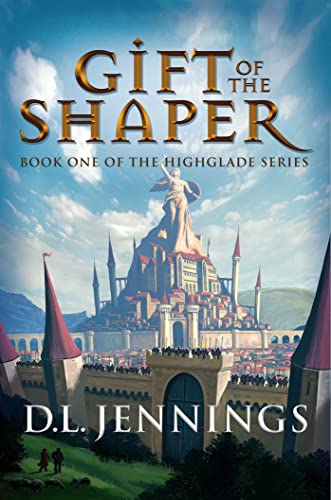
David Gaughran
Turn casual browsers into loyal fans with a proven reader acquisition and retention system.

Literature & Latte
The gold-standard writing tool for serious authors — organize, draft, and export your manuscript with ease.
Get the free KDP ACOS Calculator
A Google Sheet that calculates your break-even ACOS, true profit per sale, and optimal bid ceiling for any book — plus weekly KDP ads tips delivered every Monday.
No spam. Unsubscribe anytime.
More Resources for KDP Authors
Part of the Taciturn Studios publishing network.
CoverCrushing
covercrushing.com
Book cover inspiration and design analysis for authors who know that covers sell books.
MyAuthorVoice
myauthorvoice.com
Writing craft, author branding, and publishing guides for KDP authors.

GuideTopics
guidetopics.com
In-depth how-to guides on Amazon Ads, KDP publishing workflows, and self-publishing tools.



We use cookies and similar technologies to improve your experience, analyze site traffic, and serve relevant ads. By clicking Accept, you consent to our use of cookies as described in our Privacy Policy. You can decline non-essential cookies — the site will still work, but personalized ads won't be shown.